
How a flattering book club invitation turned into a paid promotional pitch…and led me to an investigation exposing an impersonation scam involving the same organization.
I’ve been in marketing for more than 30 years.
I’ve seen questionable sales pitches, ridiculous promotional offers, fake testimonials, and more scammers than I care to count.
But every once in a while, someone comes along with an approach so entertaining that I can’t help but follow the conversation just to see where it goes.
This time, it involved my book, And Then I Was Gone: The Things I Should Have Told You While I Was Still Here.
Apparently, someone in London loved my book.
There was just one little problem.
They hadn’t actually read it.
And eventually, they wanted me to pay as much as $350 for the privilege of having other people potentially read it.
Oh, this should be fun.
It Started With a Glowing Email
I received an email from someone calling himself Joel, claiming to represent Brain Worms Book Club, an independent reading community based in London.
The email was long.
Very long.
It praised my book’s exploration of family, marriage, regret, entrepreneurship, legacy, and the importance of saying things while we’re still alive to say them.
According to Joel, my book had “resonated powerfully” with their community.
He described my writing as refreshingly honest, humorous, and thought-provoking.
Apparently, my little book was practically changing lives across the Atlantic.
Wonderful.
Except the praise sounded suspiciously like someone had taken my book description, dropped it into an AI writing tool, and requested an enthusiastic invitation.
There wasn’t a single reference to a specific passage, story, or observation that demonstrated anyone had actually read the book.
So I started asking questions.
The First Admission: Nobody Had Read the Book
Eventually, Joel acknowledged that he was approaching me based on the book’s description and themes, not because he’d read the entire book.
Well, that’s interesting.
How does a book resonate powerfully with a community that apparently hasn’t read it?
Now, I don’t expect everyone who contacts me to have read every word I’ve written.
But there’s a difference between genuine interest and manufactured enthusiasm.
One builds credibility.
The other makes me wonder what you’re trying to sell.
And wouldn’t you know it?
There was something to sell.
Introducing the Mysterious Author Spotlight
Joel wanted to feature And Then I Was Gone through something called an Author Spotlight.
Sounds impressive.
An opportunity to introduce my work to thoughtful readers, encourage meaningful conversations, and explore the lessons contained within the book.
But the original invitation didn’t mention a price.
So I asked whether there was a fee.
That’s when I learned the program was a “contribution-based feature.”
Ah, yes.
A contribution.
Not a fee.
Not paid advertising.
Not a promotional package.
A contribution.
I’ve spent three decades watching marketers invent creative terminology to make ordinary transactions sound like something entirely different.
This was no exception.
But how much was this contribution?
That information wasn’t immediately forthcoming.
Instead, Joel offered to explain the program further.
And I kept asking questions.
A Meetup Group Is Not a Business Credential
I asked Joel whether Brain Worms Book Club had an independent website.
Nope.
According to him, Meetup served as the group’s primary public-facing platform.
Now, there’s nothing inherently wrong with using Meetup.
It’s a legitimate platform for organizing events, creating communities, and bringing people together.
But here’s the distinction.
A legitimate Meetup group doesn’t automatically make every person claiming to represent that group legitimate.
Nor does a Meetup page establish that someone operates a credible paid book-promotion business.
When I asked for more information, Joel repeatedly directed me to the same Meetup page.
I already had the link.
He’d included it in his original email.
Sending it again didn’t answer my questions.
It merely demonstrated that he knew how to copy and paste.
Show Me Three Examples
At this point, I wanted something concrete.
I asked Joel to provide three examples of previously completed paid Author Spotlights.
Not ordinary book club meetings.
Not a list of upcoming events.
Actual examples of the service he was selling.
I wanted to know what authors received, what was delivered, and what the service cost.
That’s a reasonable request from someone who’s spent decades in marketing.
If you’re selling a service, demonstrate that you’ve delivered it.
Joel acknowledged that regular Meetup events weren’t evidence of completed paid Author Spotlights.
He even admitted that actual examples and verified fees would be necessary to substantiate that comparison.
But he didn’t provide any.
Instead, I finally received the pricing.
And There It Was: $200 to $350
After several emails, Joel revealed that the Author Spotlight required a contribution ranging from $200 to $350.
And what would I receive?
The proposed package could include:
- A tailored introduction to my book and author profile.
- Visual materials.
- Discussion questions based on the book’s themes.
- Coordination of a reading period and reader discussion.
- Post-event highlights and reflections.
Notice the wording.
Could include.
Not necessarily will include.
The precise deliverables would supposedly be agreed upon later.
There were also no guarantees of sales, reviews, or favorable reader responses.
Now, I understand marketing.
No ethical marketer should guarantee results they cannot control.
But I also understand the importance of demonstrating value before asking someone to spend money.
And so far, I had no verified examples of completed paid features, no established results, and no independent confirmation that Joel was authorized to sell this service.
Then things got considerably more interesting.
Someone Else Had Already Exposed a Brain Worms Book Club Impersonation
While investigating, I discovered an article published on September 12, 2026, by author Rae Stonehouse on his website, Authors Against Scammers.
The article was titled:
“The ‘Brain Worms Book Club’ Impersonation Scam Attempt.”
Well, isn’t that a coincidence?
Rae described receiving an unsolicited email from someone named Joel, claiming to represent the very same Brain Worms Book Club.
The message praised his book, Shadows and Debts: Tales From the Nexus, and proposed an Author Spotlight.
Sound familiar?
His experience featured many of the same elements I’d encountered.
An unsolicited invitation.
Enthusiastic praise.
A book club identity.
A Gmail address.
And an Author Spotlight opportunity.
But Rae did something especially important.
He contacted the actual Meetup organizer directly to verify the invitation.
According to Rae’s published account, the organizer responded:
“Hey. Sorry. That’s not me. All the best 🙏”
That’s a rather significant development.
Rae documented the incident as an impersonation attempt involving a legitimate Meetup group.
You can read his investigation here:
https://authorsagainstscammers.org/2026/09/12/the-brain-worms-book-club-impersonation-scam-attempt/
Same Book Club. Same Name. Same Approach.
Now, there is an important distinction.
The Gmail address documented in Rae’s investigation was different from the address used to contact me.
His correspondence came from:
brainswormsbookclubs@gmail.com
Mine came from:
brainwormsbookclub.london@gmail.com
That difference matters.
I cannot independently establish that both email accounts belong to the same individual or that the person contacting me is the same impersonator Rae encountered.
And I haven’t independently verified my sender’s identity with the real Meetup organizer.
But the similarities are difficult to ignore.
Both approaches involved someone calling himself Joel.
Both claimed to represent Brain Worms Book Club.
Both offered an Author Spotlight.
Both used flattering language about books they hadn’t demonstrated reading.
And in my case, the conversation eventually produced a request for $200 to $350.
Rae’s investigation documented a confirmed denial of affiliation in his case.
My experience documented a paid solicitation with striking similarities.
That’s more than enough reason to question the offer rather than blindly hand over money.
The Real Problem Isn’t the $350
Let’s be clear.
Paying $350 for legitimate book promotion isn’t inherently unreasonable.
I’ve spent far more than that on marketing over the years.
And a small book club doesn’t need a fancy website, expensive software, or a corporate office to provide something worthwhile.
But when you’re soliciting money from authors, you should be able to establish who you are, what you’re selling, and whether you’re authorized to represent the organization whose name you’re using.
That shouldn’t require a lengthy email investigation.
And if someone asks for examples of your work, you should have something meaningful to show them.
A polished email is not a portfolio.
A Meetup link is not proof of authorization.
And flattering an author isn’t evidence that you’ve read the book.
Why Authors Are Attractive Targets
Think about it.
Authors invest months, sometimes years, writing books.
They spend money on editing, formatting, covers, publishing, and promotion.
Then comes the difficult part.
Getting people to read what they’ve written.
That’s where questionable promoters find an opportunity.
They offer visibility.
They promise exposure.
They talk about engaged audiences and meaningful conversations.
And they know some authors are desperate enough for attention that a few hundred dollars might seem like a reasonable gamble.
But exposure isn’t automatically valuable.
An audience isn’t automatically interested.
And a promotional opportunity isn’t automatically legitimate simply because someone describes it enthusiastically.
Hope is not a marketing strategy.
Neither is handing strangers money because they complimented your book.
The Marketing Lesson
Here’s what I tell entrepreneurs all the time.
Do your homework.
Ask questions.
Verify claims.
And don’t confuse enthusiasm with credibility.
If someone approaches you with a paid promotional opportunity, ask to see examples of their work.
Ask about pricing.
Ask what you’re actually receiving.
Ask how success will be measured.
And most importantly, verify that the person contacting you is who they claim to be.
Don’t rely solely on the website or contact information they provide.
Go directly to the organization through an independently verified channel.
A legitimate business should welcome reasonable due diligence.
And if a seller cannot answer basic questions without sending another three paragraphs of polished marketing language, perhaps that’s your answer.
The Irony of It All
I wrote And Then I Was Gone because I believe people should say the things that matter while they still have the opportunity.
It’s about life, family, business, mistakes, consequences, and leaving something meaningful behind.
I didn’t write it to pay strangers to pretend they’ve been moved by it.
And I certainly didn’t write it so someone could turn a book description into a flattering sales pitch.
But here’s the funny part.
The person who contacted me wanted to make money promoting my book.
Instead, the entire exchange gave me material for another article.
Free content.
A real-world marketing lesson.
And another opportunity to remind authors and entrepreneurs that credibility must be earned.
Not manufactured.
Not borrowed from an existing community.
And definitely not created by copying a book description into an enthusiastic email.
As for the $350?
I’ll keep it.
Because the only thing worse than someone judging a book by its cover is someone trying to charge the author $350 to do it.

Rob Anspach is an Authority Architect, Legacy Builder, speaker, author, podcaster, and Founder of Anspach Media.
For more than 30 years, he has helped entrepreneurs build authority, create meaningful relationships, and leave a lasting legacy through books, speaking, trusted guidance, podcasting, and immersive experiences.
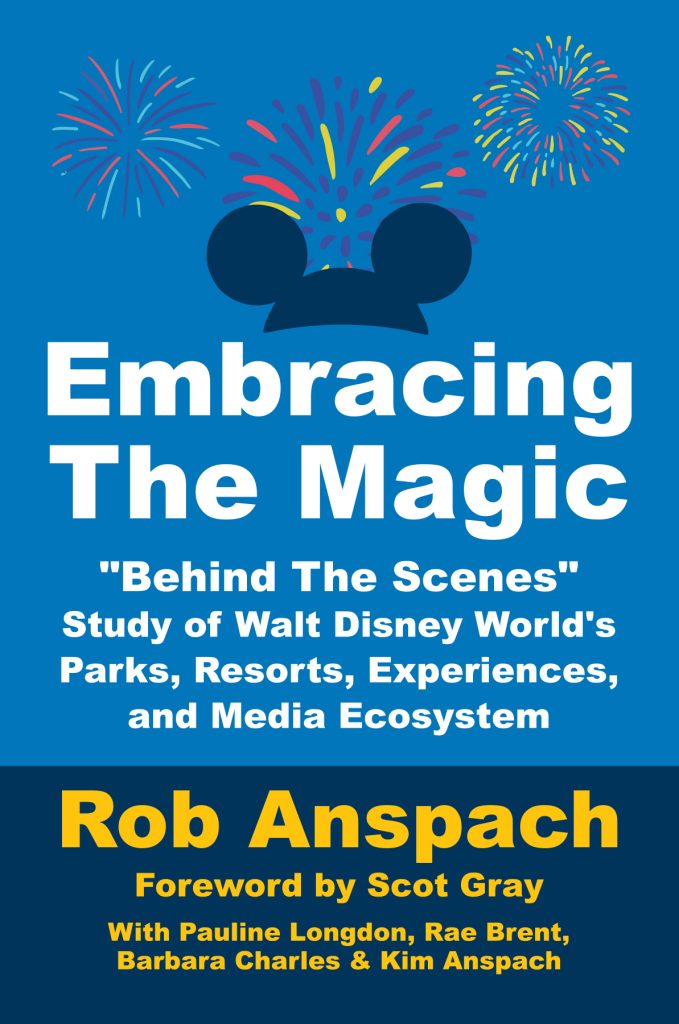
He is the host of the E-Heroes Podcast and the creator of Embracing The Magic and Exploring The Magic.





Recent Blog Article Comments