
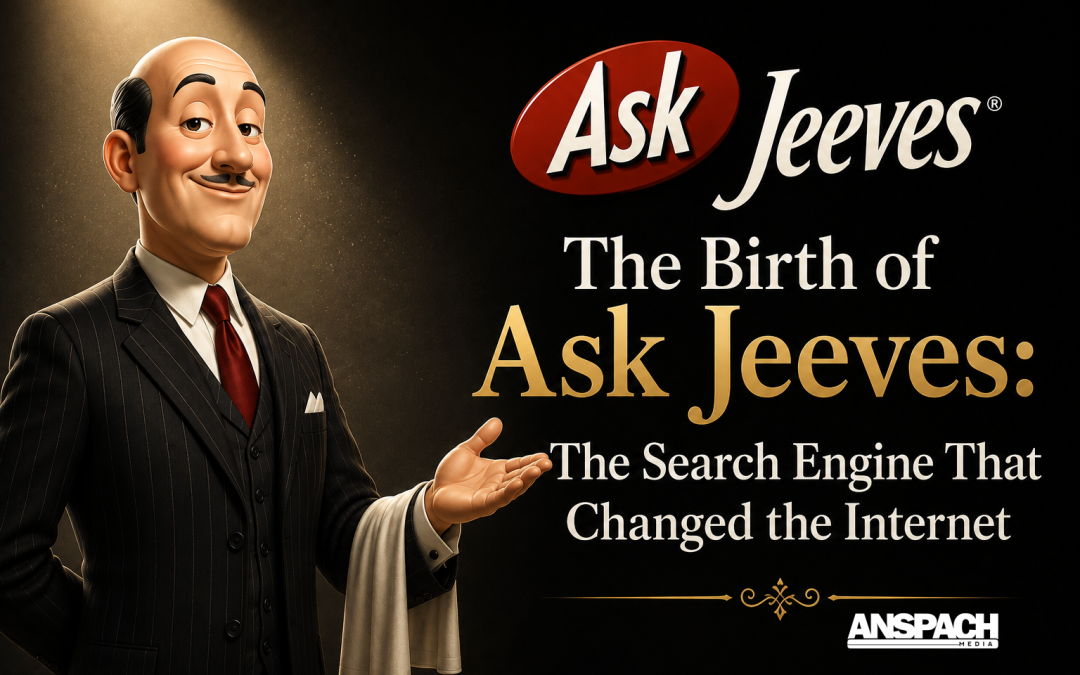
Before Google became a verb, before AI answered questions in seconds, and before billions of people carried the internet in their pockets, there was a search engine with a simple idea:
What if you could just ask a question?
That idea became Ask Jeeves, one of the most recognizable brands of the early internet and one of the companies that quietly influenced how we search for information today.
On a recent episode of the E-Heroes podcast, I had the opportunity to sit down with David Warthen, co-founder of Ask Jeeves, to discuss the company’s remarkable journey from a simple concept in 1996 to one of the internet’s most memorable brands.
The Internet Wasn’t Built for Ordinary People
It’s easy to forget what searching the web looked like in the mid-1990s.
Most search engines expected users to think like programmers. You were encouraged to use Boolean operators, specific keywords, and carefully crafted search phrases. If you didn’t know the “correct” way to search, you often ended up with thousands—or even millions—of irrelevant results.
David and his co-founder saw a different opportunity.
Instead of training people to use computers, they wanted computers to understand people.
That single shift in thinking became the foundation of Ask Jeeves.
Ask a Question. Get an Answer.
Rather than forcing users to type awkward keyword combinations, Ask Jeeves invited them to simply ask a question.
“Where can I find information about…”
“How do I…”
“What is…”
Today that sounds completely normal.
In 1996, it was revolutionary.
The team believed technology should feel approachable instead of intimidating. Their goal wasn’t simply to build another search engine—it was to make the internet easier for everyone.
That philosophy eventually became one of Ask Jeeves’ greatest competitive advantages.
Building a Company on Faith
Like many legendary startups, Ask Jeeves didn’t begin with unlimited venture capital.
David and his co-founder invested their own money.
They worked from modest offices in Berkeley.
The team consisted of only a handful of people:
- Programmers
- Content curators
- Big dreams
- Very limited resources
Instead of trying to index the entire internet, they focused on answering the questions people asked most frequently.
It was a practical solution built around understanding human behavior rather than overwhelming technology.
Creating a Brand People Remembered
The technology mattered.
But so did the experience.
David understood something many technology companies still overlook today:
People connect with personalities.
The friendly butler named Jeeves wasn’t just a mascot.
He represented helpfulness.
He represented trust.
He represented approachability.
That simple character transformed what could have been another forgettable search engine into one of the internet’s most recognizable brands.
Even today, decades later, many people still remember Jeeves before they remember several competing search engines from the same era.
That’s the power of branding.
Simplicity Wins
One of the most fascinating stories David shared was how Ask Jeeves intentionally created an uncluttered homepage with one large search box.
At the time, many search portals filled their homepages with news, weather, stock quotes, advertisements, and dozens of links competing for attention.
Ask Jeeves focused on one thing:
Ask a question.
Years later, Google adopted much of that minimalist philosophy.
Even Google’s former CEO acknowledged the value of Ask Jeeves’ simple interface and the way it encouraged users to type longer, more natural searches.
Sometimes innovation isn’t inventing something entirely new.
Sometimes it’s removing everything that gets in the way.
Growth Didn’t Come From Luck Alone
Certainly, Ask Jeeves caught a few fortunate breaks.
Being selected as a Yahoo “Pick of the Week” generated an enormous spike in traffic.
Talk radio interviews introduced the service to audiences who were still learning what the internet even was.
But luck only opens the door.
Preparation determines whether you can walk through it.
The Ask Jeeves team continued improving the product, refining the user experience, and expanding their knowledge base.
Word-of-mouth took over.
People shared the service because it solved a real problem.
That’s a lesson every entrepreneur should remember.
The best marketing begins with creating something worth talking about.
Investors Who Added More Than Money
One of David’s most insightful observations involved raising capital.
Not all investors are equal.
The early investment group behind Ask Jeeves didn’t simply provide funding.
They provided guidance.
Introductions.
Strategy.
Connections.
They challenged the founders to think differently about the business.
Instead of describing Ask Jeeves as “another search engine,” they positioned it as the world’s leading question-answering service.
That subtle shift completely changed how the market viewed the company.
Sometimes success isn’t changing your product.
It’s changing the story you tell about it.
Lessons That Still Matter Today
Listening to David describe those early days, I couldn’t help but notice how many of the principles remain relevant almost thirty years later.
Technology changes.
Algorithms evolve.
Platforms come and go.
But certain truths never disappear:
- Make complex things simple.
- Solve real problems.
- Build memorable experiences.
- Put people before technology.
- Create something others naturally want to share.
Those lessons built Ask Jeeves.
They’re still building successful businesses today.
Final Thoughts
The internet has evolved dramatically since 1996.
Search engines have become AI assistants.
Keywords have become conversations.
Algorithms have become intelligent systems capable of understanding context.
Yet one of the biggest ideas behind modern AI-assisted search was already taking shape inside a small Berkeley startup nearly three decades ago.
Ask Jeeves wasn’t simply another search engine.
It helped redefine how humans interact with information.
And that’s a legacy worth remembering.

Rob Anspach is an Authority Architect, Legacy Builder, speaker, author, podcaster, and Founder of Anspach Media.
For more than 30 years, he has helped entrepreneurs build authority, create meaningful relationships, and leave a lasting legacy through books, speaking, trusted guidance, podcasting, and immersive experiences.
He is the host of the E-Heroes Podcast and the creator of Embrace The Magic and Explore The Magic.
- Rob Anspach
- Rob Anspach
- Rob Anspach
- Rob Anspach
- Rob Anspach
- Rob Anspach
- Rob Anspach
- Rob Anspach
- Rob Anspach
- Rob Anspach
- Rob Anspach
- Rob Anspach
- Rob Anspach
- Rob Anspach
- Rob Anspach
- Rob Anspach
- Rob Anspach
- Rob Anspach
- Rob Anspach
- Rob Anspach
- Rob Anspach
- Rob Anspach
- Rob Anspach
- Rob Anspach
- Rob Anspach
- Rob Anspach
- Rob Anspach
- Rob Anspach
- Rob Anspach
- Rob Anspach
- Rob Anspach
- Rob Anspach
- Rob Anspach
- Rob Anspach
- Rob Anspach
- Rob Anspach
- Rob Anspach
- Rob Anspach
- Rob Anspach
- Rob Anspach
- Rob Anspach
- Rob Anspach
- Rob Anspach
- Rob Anspach
- Rob Anspach
- Rob Anspach
- Rob Anspach
- Rob Anspach
- Rob Anspach
- Rob Anspach
- Rob Anspach
- Rob Anspach
- Rob Anspach
- Rob Anspach
- Rob Anspach
- Rob Anspach
- Rob Anspach
- Rob Anspach
- Rob Anspach
- Rob Anspach
- Rob Anspach
- Rob Anspach
- Rob Anspach
- Rob Anspach
- Rob Anspach
- Rob Anspach
- Rob Anspach
- Rob Anspach
- Rob Anspach
- Rob Anspach
- Rob Anspach
- Rob Anspach
- Rob Anspach
- Rob Anspach
- Rob Anspach
- Rob Anspach
- Rob Anspach
- Rob Anspach
- Rob Anspach
- Rob Anspach
- Rob Anspach
- Rob Anspach
- Rob Anspach
- Rob Anspach
- Rob Anspach
- Rob Anspach
- Rob Anspach
- Rob Anspach
- Rob Anspach
- Rob Anspach
- Rob Anspach
- Rob Anspach
- Rob Anspach
- Rob Anspach
- Rob Anspach
- Rob Anspach
- Rob Anspach
- Rob Anspach
- Rob Anspach
- Rob Anspach
- Rob Anspach
- Rob Anspach
- Rob Anspach
- Rob Anspach
- Rob Anspach
- Rob Anspach
- Rob Anspach
- Rob Anspach
- Rob Anspach
- Rob Anspach
- Rob Anspach
- Rob Anspach
- Rob Anspach
- Rob Anspach
- Rob Anspach
- Rob Anspach
- Rob Anspach
- Rob Anspach
- Rob Anspach
- Rob Anspach
- Rob Anspach
- Rob Anspach
- Rob Anspach
- Rob Anspach
- Rob Anspach
- Rob Anspach
- Rob Anspach
- Rob Anspach
- Rob Anspach
- Rob Anspach
- Rob Anspach
- Rob Anspach
- Rob Anspach
- Rob Anspach
- Rob Anspach
- Rob Anspach
- Rob Anspach
- Rob Anspach
- Rob Anspach
- Rob Anspach
- Rob Anspach
- Rob Anspach
- Rob Anspach
- Rob Anspach
- Rob Anspach
- Rob Anspach
- Rob Anspach
- Rob Anspach
- Rob Anspach
- Rob Anspach
- Rob Anspach
- Rob Anspach
- Rob Anspach
- Rob Anspach
- Rob Anspach
- Rob Anspach
- Rob Anspach
- Rob Anspach
- Rob Anspach
- Rob Anspach
- Rob Anspach
- Rob Anspach
- Rob Anspach
- Rob Anspach
- Rob Anspach
- Rob Anspach
- Rob Anspach
- Rob Anspach
- Rob Anspach
- Rob Anspach
- Rob Anspach
- Rob Anspach
- Rob Anspach
- Rob Anspach
- Rob Anspach
- Rob Anspach
- Rob Anspach
- Rob Anspach
- Rob Anspach
- Rob Anspach
- Rob Anspach
- Rob Anspach
- Rob Anspach
- Rob Anspach
- Rob Anspach
- Rob Anspach
- Rob Anspach
- Rob Anspach
- Rob Anspach
- Rob Anspach
- Rob Anspach
- Rob Anspach
- Rob Anspach
- Rob Anspach
- Rob Anspach
- Rob Anspach
- Rob Anspach
- Rob Anspach
- Rob Anspach
- Rob Anspach
- Rob Anspach
- Rob Anspach
- Rob Anspach
- Rob Anspach
- Rob Anspach
- Rob Anspach
- Rob Anspach
- Rob Anspach
- Rob Anspach
- Rob Anspach
- Rob Anspach
- Rob Anspach
- Rob Anspach
- Rob Anspach
- Rob Anspach
- Rob Anspach
- Rob Anspach
- Rob Anspach
- Rob Anspach
- Rob Anspach
- Rob Anspach
- Rob Anspach
- Rob Anspach
- Rob Anspach
- Rob Anspach
- Rob Anspach
- Rob Anspach
- Rob Anspach
- Rob Anspach
- Rob Anspach
- Rob Anspach
- Rob Anspach
- Rob Anspach
- Rob Anspach
- Rob Anspach
- Rob Anspach
- Rob Anspach
- Rob Anspach
- Rob Anspach
- Rob Anspach
- Rob Anspach
- Rob Anspach
- Rob Anspach
- Rob Anspach
- Rob Anspach
- Rob Anspach
- Rob Anspach
- Rob Anspach
- Rob Anspach
- Rob Anspach
- Rob Anspach
- Rob Anspach
- Rob Anspach
- Rob Anspach
- Rob Anspach
- Rob Anspach
- Rob Anspach
- Rob Anspach
- Rob Anspach
- Rob Anspach
- Rob Anspach
- Rob Anspach
- Rob Anspach
- Rob Anspach
- Rob Anspach
- Rob Anspach
- Rob Anspach
- Rob Anspach
- Rob Anspach
- Rob Anspach
- Rob Anspach
- Rob Anspach
- Rob Anspach
- Rob Anspach
- Rob Anspach
- Rob Anspach
- Rob Anspach
- Rob Anspach
- Rob Anspach
- Rob Anspach
- Rob Anspach
- Rob Anspach
- Rob Anspach
- Rob Anspach
- Rob Anspach
- Rob Anspach
- Rob Anspach
- Rob Anspach
- Rob Anspach
- Rob Anspach
- Rob Anspach
- Rob Anspach
- Rob Anspach
- Rob Anspach
- Rob Anspach
- Rob Anspach
- Rob Anspach
- Rob Anspach
- Rob Anspach
- Rob Anspach
- Rob Anspach
- Rob Anspach
- Rob Anspach
- Rob Anspach
- Rob Anspach
- Rob Anspach
- Rob Anspach
- Rob Anspach
- Rob Anspach
- Rob Anspach
- Rob Anspach
- Rob Anspach
- Rob Anspach
- Rob Anspach
- Rob Anspach
- Rob Anspach
- Rob Anspach
- Rob Anspach
- Rob Anspach
- Rob Anspach
- Rob Anspach
- Rob Anspach
- Rob Anspach
- Rob Anspach
- Rob Anspach
- Rob Anspach
- Rob Anspach
- Rob Anspach
- Rob Anspach
- Rob Anspach
- Rob Anspach
- Rob Anspach
- Rob Anspach
- Rob Anspach
- Rob Anspach
- Rob Anspach
- Rob Anspach
- Rob Anspach
- Rob Anspach
- Rob Anspach
- Rob Anspach
- Rob Anspach
- Rob Anspach
- Rob Anspach
- Rob Anspach
- Rob Anspach
- Rob Anspach
- Rob Anspach
- Rob Anspach
- Rob Anspach
- Rob Anspach
- Rob Anspach
- Rob Anspach
- Rob Anspach
- Rob Anspach
- Rob Anspach
- Rob Anspach
- Rob Anspach
- Rob Anspach
- Rob Anspach
- Rob Anspach
- Rob Anspach
- Rob Anspach
- Rob Anspach
- Rob Anspach
- Rob Anspach
- Rob Anspach
- Rob Anspach
- Rob Anspach
- Rob Anspach
- Rob Anspach
- Rob Anspach
- Rob Anspach
- Rob Anspach
- Rob Anspach
- Rob Anspach
- Rob Anspach
- Rob Anspach
- Rob Anspach
- Rob Anspach
- Rob Anspach
- Rob Anspach
- Rob Anspach
- Rob Anspach
- Rob Anspach
- Rob Anspach
- Rob Anspach
- Rob Anspach
- Rob Anspach
- Rob Anspach
- Rob Anspach
- Rob Anspach
- Rob Anspach
- Rob Anspach
- Rob Anspach
- Rob Anspach
- Rob Anspach
- Rob Anspach
- Rob Anspach
- Rob Anspach
- Rob Anspach
- Rob Anspach
- Rob Anspach
- Rob Anspach
- Rob Anspach
- Rob Anspach
- Rob Anspach
- Rob Anspach
- Rob Anspach
- Rob Anspach
- Rob Anspach
- Rob Anspach
- Rob Anspach
- Rob Anspach
- Rob Anspach
- Rob Anspach
- Rob Anspach
- Rob Anspach
- Rob Anspach
- Rob Anspach
- Rob Anspach
- Rob Anspach
- Rob Anspach
- Rob Anspach
- Rob Anspach
- Rob Anspach
- Rob Anspach
- Rob Anspach
- Rob Anspach
- Rob Anspach
- Rob Anspach
- Rob Anspach
- Rob Anspach
- Rob Anspach
- Rob Anspach
- Rob Anspach
- Rob Anspach
- Rob Anspach
- Rob Anspach
- Rob Anspach
- Rob Anspach
- Rob Anspach
- Rob Anspach
- Rob Anspach
- Rob Anspach
- Rob Anspach
- Rob Anspach
- Rob Anspach
- Rob Anspach
- Rob Anspach
- Rob Anspach
- Rob Anspach
- Rob Anspach
- Rob Anspach
- Rob Anspach
- Rob Anspach
- Rob Anspach
- Rob Anspach
- Rob Anspach
- Rob Anspach
- Rob Anspach
- Rob Anspach
- Rob Anspach
- Rob Anspach
- Rob Anspach
- Rob Anspach
- Rob Anspach
- Rob Anspach
- Rob Anspach
- Rob Anspach
- Rob Anspach
- Rob Anspach
- Rob Anspach
- Rob Anspach
- Rob Anspach
- Rob Anspach
- Rob Anspach
- Rob Anspach
- Rob Anspach
- Rob Anspach
- Rob Anspach
- Rob Anspach
- Rob Anspach
- Rob Anspach
- Rob Anspach
- Rob Anspach
- Rob Anspach
- Rob Anspach
- Rob Anspach
- Rob Anspach
- Rob Anspach
- Rob Anspach
- Rob Anspach
- Rob Anspach
- Rob Anspach
- Rob Anspach
- Rob Anspach
- Rob Anspach
- Rob Anspach
- Rob Anspach
- Rob Anspach
- Rob Anspach
- Rob Anspach
- Rob Anspach
- Rob Anspach
- Rob Anspach
- Rob Anspach
- Rob Anspach
- Rob Anspach
- Rob Anspach
- Rob Anspach
- Rob Anspach
- Rob Anspach
- Rob Anspach
- Rob Anspach
- Rob Anspach
- Rob Anspach
- Rob Anspach
- Rob Anspach
- Rob Anspach
- Rob Anspach
- Rob Anspach
- Rob Anspach
- Rob Anspach
- Rob Anspach
- Rob Anspach
- Rob Anspach
- Rob Anspach
- Rob Anspach
- Rob Anspach
- Rob Anspach
- Rob Anspach
- Rob Anspach
- Rob Anspach
- Rob Anspach
- Rob Anspach
- Rob Anspach
- Rob Anspach
- Rob Anspach
- Rob Anspach
- Rob Anspach
- Rob Anspach
- Rob Anspach
- Rob Anspach
- Rob Anspach
- Rob Anspach
- Rob Anspach
- Rob Anspach
- Rob Anspach
- Rob Anspach
- Rob Anspach
- Rob Anspach
- Rob Anspach
- Rob Anspach
- Rob Anspach
- Rob Anspach
- Rob Anspach
- Rob Anspach
- Rob Anspach
- Rob Anspach
- Rob Anspach
- Rob Anspach
- Rob Anspach
- Rob Anspach
- Rob Anspach
- Rob Anspach
- Rob Anspach
- Rob Anspach
- Rob Anspach
- Rob Anspach
- Rob Anspach
- Rob Anspach
- Rob Anspach
- Rob Anspach
- Rob Anspach
- Rob Anspach
- Rob Anspach
- Rob Anspach
- Rob Anspach
- Rob Anspach
- Rob Anspach
- Rob Anspach
- Rob Anspach
- Rob Anspach
- Rob Anspach
- Rob Anspach
- Rob Anspach
- Rob Anspach
- Rob Anspach
- Rob Anspach
- Rob Anspach
- Rob Anspach
- Rob Anspach
- Rob Anspach
- Rob Anspach
- Rob Anspach
- Rob Anspach
- Rob Anspach
- Rob Anspach
- Rob Anspach
- Rob Anspach
- Rob Anspach
- Rob Anspach
- Rob Anspach
- Rob Anspach
- Rob Anspach
- Rob Anspach
- Rob Anspach
- Rob Anspach
- Rob Anspach
- Rob Anspach
- Rob Anspach
- Rob Anspach
- Rob Anspach
- Rob Anspach
- Rob Anspach
- Rob Anspach
- Rob Anspach
- Rob Anspach
- Rob Anspach
- Rob Anspach
- Rob Anspach
- Rob Anspach
- Rob Anspach
- Rob Anspach
- Rob Anspach
- Rob Anspach
- Rob Anspach
- Rob Anspach
- Rob Anspach
- Rob Anspach
- Rob Anspach
- Rob Anspach
- Rob Anspach
- Rob Anspach
- Rob Anspach
- Rob Anspach
- Rob Anspach
- Rob Anspach
- Rob Anspach
- Rob Anspach
- Rob Anspach
- Rob Anspach
- Rob Anspach
- Rob Anspach
- Rob Anspach
- Rob Anspach
- Rob Anspach
- Rob Anspach
- Rob Anspach
- Rob Anspach
- Rob Anspach
- Rob Anspach
- Rob Anspach
- Rob Anspach
- Rob Anspach
- Rob Anspach
- Rob Anspach
- Rob Anspach
- Rob Anspach
- Rob Anspach
- Rob Anspach
- Rob Anspach
- Rob Anspach
- Rob Anspach
- Rob Anspach
- Rob Anspach
- Rob Anspach
- Rob Anspach
- Rob Anspach
- Rob Anspach
- Rob Anspach
- Rob Anspach
- Rob Anspach
- Rob Anspach
- Rob Anspach
- Rob Anspach
- Rob Anspach
- Rob Anspach
- Rob Anspach
- Rob Anspach
- Rob Anspach
- Rob Anspach
- Rob Anspach
- Rob Anspach
- Rob Anspach
- Rob Anspach
- Rob Anspach
- Rob Anspach
- Rob Anspach
- Rob Anspach
- Rob Anspach
- Rob Anspach
- Rob Anspach
- Rob Anspach
- Rob Anspach
- Rob Anspach
- Rob Anspach
- Rob Anspach
- Rob Anspach
- Rob Anspach
- Rob Anspach
- Rob Anspach
- Rob Anspach
- Rob Anspach
- Rob Anspach
- Rob Anspach
- Rob Anspach
- Rob Anspach
- Rob Anspach
- Rob Anspach
- Rob Anspach
- Rob Anspach
- Rob Anspach
- Rob Anspach
- Rob Anspach
- Rob Anspach
- Rob Anspach
- Rob Anspach
- Rob Anspach
- Rob Anspach
- Rob Anspach
- Rob Anspach
- Rob Anspach
- Rob Anspach
- Rob Anspach
- Rob Anspach
- Rob Anspach
- Rob Anspach
- Rob Anspach
- Rob Anspach
- Rob Anspach
- Rob Anspach
- Rob Anspach
- Rob Anspach
- Rob Anspach
- Rob Anspach
- Rob Anspach
- Rob Anspach
- Rob Anspach
- Rob Anspach
- Rob Anspach
- Rob Anspach
- Rob Anspach
- Rob Anspach
- Rob Anspach
- Rob Anspach
- Rob Anspach
- Rob Anspach
- Rob Anspach
- Rob Anspach
- Rob Anspach
- Rob Anspach
- Rob Anspach
- Rob Anspach
- Rob Anspach
- Rob Anspach
- Rob Anspach
- Rob Anspach
- Rob Anspach
- Rob Anspach
- Rob Anspach
- Rob Anspach
- Rob Anspach
- Rob Anspach
- Rob Anspach
- Rob Anspach
- Rob Anspach
- Rob Anspach
- Rob Anspach
- Rob Anspach
- Rob Anspach
- Rob Anspach
- Rob Anspach
- Rob Anspach
- Rob Anspach
- Rob Anspach
- Rob Anspach
- Rob Anspach
- Rob Anspach
- Rob Anspach
- Rob Anspach
- Rob Anspach
- Rob Anspach
- Rob Anspach
- Rob Anspach
- Rob Anspach
- Rob Anspach
- Rob Anspach
- Rob Anspach
- Rob Anspach
- Rob Anspach
- Rob Anspach
- Rob Anspach
- Rob Anspach
- Rob Anspach
- Rob Anspach
- Rob Anspach
- Rob Anspach
- Rob Anspach
- Rob Anspach
- Rob Anspach
- Rob Anspach
- Rob Anspach
- Rob Anspach
- Rob Anspach
- Rob Anspach
- Rob Anspach
- Rob Anspach
- Rob Anspach
- Rob Anspach
- Rob Anspach
- Rob Anspach
- Rob Anspach
- Rob Anspach
- Rob Anspach
- Rob Anspach
- Rob Anspach
- Rob Anspach
- Rob Anspach
- Rob Anspach
- Rob Anspach
- Rob Anspach
- Rob Anspach
- Rob Anspach
- Rob Anspach
- Rob Anspach
- Rob Anspach
- Rob Anspach
- Rob Anspach
- Rob Anspach
- Rob Anspach
- Rob Anspach
- Rob Anspach
- Rob Anspach
- Rob Anspach
- Rob Anspach
- Rob Anspach
- Rob Anspach
- Rob Anspach
- Rob Anspach
- Rob Anspach
- Rob Anspach
- Rob Anspach
- Rob Anspach
- Rob Anspach
- Rob Anspach
- Rob Anspach
- Rob Anspach
- Rob Anspach
- Rob Anspach
- Rob Anspach
- Rob Anspach
- Rob Anspach
- Rob Anspach
- Rob Anspach
- Rob Anspach
- Rob Anspach
- Rob Anspach
- Rob Anspach
- Rob Anspach
- Rob Anspach
- Rob Anspach
- Rob Anspach
- Rob Anspach
- Rob Anspach
- Rob Anspach
- Rob Anspach
- Rob Anspach
- Rob Anspach
- Rob Anspach
- Rob Anspach
- Rob Anspach
- Rob Anspach
- Rob Anspach
- Rob Anspach
- Rob Anspach
- Rob Anspach
- Rob Anspach
- Rob Anspach
- Rob Anspach
- Rob Anspach
- Rob Anspach
- Rob Anspach
- Rob Anspach
- Rob Anspach
- Rob Anspach
- Rob Anspach
- Rob Anspach
- Rob Anspach
- Rob Anspach
- Rob Anspach
- Rob Anspach
- Rob Anspach
- Rob Anspach
- Rob Anspach
- Rob Anspach
- Rob Anspach
- Rob Anspach
- Rob Anspach
- Rob Anspach
- Rob Anspach
- Rob Anspach
- Rob Anspach
- Rob Anspach
- Rob Anspach
- Rob Anspach
- Rob Anspach
- Rob Anspach
- Rob Anspach
- Rob Anspach
- Rob Anspach
- Rob Anspach
- Rob Anspach
- Rob Anspach
- Rob Anspach
- Rob Anspach
- Rob Anspach
- Rob Anspach
- Rob Anspach
- Rob Anspach
- Rob Anspach
- Rob Anspach
- Rob Anspach
- Rob Anspach
- Rob Anspach
- Rob Anspach
- Rob Anspach
- Rob Anspach
- Rob Anspach
- Rob Anspach
- Rob Anspach
- Rob Anspach
- Rob Anspach
- Rob Anspach
- Rob Anspach
- Rob Anspach
- Rob Anspach
- Rob Anspach
- Rob Anspach
- Rob Anspach
- Rob Anspach
- Rob Anspach
- Rob Anspach
- Rob Anspach






Recent Blog Article Comments