
Why Entrepreneurs Work Harder, Earn Less, and Struggle to Find Freedom
You started a business because you wanted freedom. So why does it feel like you’ve created a job you can never quit?
That’s the question at the heart of my conversation with Justin Maxwell on episode 421 of the E-Heroes Podcast.
Justin specializes in helping entrepreneurs optimize their taxes, build wealth, and create financial systems that support their personal and business goals. He’s also the author of the upcoming book, The Business That Owns You and the Five Keys to Taking It Back.
And the title alone should make a few entrepreneurs uncomfortable.
Because somewhere along the way, a lot of business owners stopped owning their businesses.
Their businesses started owning them.
Congratulations. You’ve Created Yourself a Job.
I’ve been an entrepreneur for 31 years.
I started with a carpet cleaning business in 1995, eventually built a marketing agency, and learned a few lessons along the way. Some were expensive. Some were painful. And some required me to recognize that working harder wasn’t necessarily making me more successful.
One of the biggest traps entrepreneurs fall into is believing that being busy means they’re building something valuable.
They’re answering emails at midnight. Taking calls on weekends. Working through vacations. Doing everything themselves because nobody else can supposedly do it right.
Sound familiar?
Here’s the problem.
If your business can’t function without you, you haven’t necessarily built an asset. You’ve built yourself a demanding job.
And unlike a traditional job, there’s no guaranteed paycheck, paid vacation, or employer-sponsored retirement plan.
Justin explained that many entrepreneurs leave traditional W-2 employment seeking independence, only to recreate the same limitations they were trying to escape.
Except now they’re responsible for everything.
That’s not freedom.
That’s entrepreneurship with handcuffs.
Your Relationship With Money Might Be Your Biggest Obstacle
One of the more interesting parts of our conversation involved something most business owners rarely discuss.
Their relationship with money.
Justin explained how our financial beliefs are often shaped long before we start our first business.
Maybe you grew up in a household where money was always tight.
Maybe your parents believed wealthy people were greedy.
Maybe you were taught that saving every penny was responsible, while spending money on yourself was selfish.
Those beliefs don’t magically disappear when you become an entrepreneur.
They follow you.
And sometimes they sabotage you.
Justin described a financial doom loop in which entrepreneurs continue operating according to the financial standards they learned growing up, even when their businesses have the potential to generate substantially more wealth.
They undercharge.
They hesitate to invest.
They avoid financial decisions.
And they convince themselves that struggling is simply part of being a business owner.
I’ve seen this repeatedly over three decades.
Entrepreneurs who are brilliant at what they do but absolutely terrified to charge what they’re worth.
Which brings me to something I’ve been saying for years.
Raise your damn prices.
You Can’t Build Wealth If You’re Afraid to Make Money
Pricing is one of the most emotional decisions an entrepreneur makes.
People worry about losing customers.
They worry about being perceived as expensive.
They worry that someone else will offer the same service for less.
So they keep their prices artificially low.
Then they complain about not making enough money.
See the problem?
During our conversation, Justin and I discussed how entrepreneurs often undervalue their services because of deeply ingrained financial beliefs.
But pricing isn’t simply about covering expenses.
Your prices need to support the business you’re building and the life you want to live.
That includes profitability, retirement contributions, emergency reserves, investments, and the ability to step away without everything falling apart.
If your business generates enough revenue to pay the bills but nothing beyond that, you’re not creating long-term financial independence.
You’re surviving.
And survival shouldn’t be the ultimate goal of entrepreneurship.
Stop Following Financial Advice Designed for Everybody Else
How much money do you need to retire?
A million dollars?
Two million?
Five million?
According to whom?
One of Justin’s strongest points was that financial planning should be personalized.
Yet entrepreneurs are constantly bombarded with generic recommendations.
Save a certain percentage of your income.
Invest in specific financial products.
Build a retirement account to some arbitrary number.
Follow this strategy because it worked for someone else.
Justin compared financial optimization to the way businesses approach other forms of optimization.
And I immediately thought about SEO.
Just because a strategy works for one business doesn’t mean it’s the right strategy for another.
The same applies to taxes, investments, and retirement planning.
An entrepreneur who wants to retire at 55 and travel the world has different needs from someone who wants to work until 75 and leave a business to their children.
Neither goal is inherently wrong.
But the financial systems supporting those goals should look different.
Justin’s approach involves coordinating tax planning, investments, cash flow, and wealth-building strategies around the entrepreneur’s actual objectives.
Not somebody else’s definition of success.
Your financial plan should support your life. Your life shouldn’t be dictated by a generic financial plan.
What Disney World Taught Me About Business Growth
Here’s something that might surprise people.
Disney World helped me become a better entrepreneur.
Not because Mickey Mouse gave me financial advice.
Although that would make an interesting podcast episode.
Over the years, I noticed something peculiar.
Whenever I went to Walt Disney World on vacation, I seemed to attract new clients.
I’d leave Pennsylvania, spend time enjoying the parks, observe how Disney marketed experiences, and somehow business opportunities would appear.
Eventually, I recognized two things.
First, I didn’t need to be chained to my desk to generate business.
Second, I needed to charge enough that I could afford to enjoy the freedom entrepreneurship was supposed to provide.
So I began raising my fees.
I also paid closer attention to how Disney creates value, communicates experiences, and builds customer loyalty.
Those lessons influenced how I approached my own business.
The bigger revelation?
My business could continue creating opportunities even when I wasn’t physically sitting in front of a computer.
And that leads directly into Justin’s philosophy.
Build a Business Someone Else Would Actually Want to Buy
Entrepreneurs love talking about revenue.
But revenue alone doesn’t determine what a business is worth.
A business generating substantial revenue might have very little transferable value if everything depends on the owner.
Justin explained that building an independently operating business generally requires several years of intentional development.
Systems.
Processes.
Leadership.
A capable team.
Consistent delivery.
The objective is to create an organization that produces value without requiring the founder to personally oversee every transaction.
I understand this from experience.
After 19 years of operating my carpet cleaning business, I sold it.
Unfortunately, the buyer didn’t follow the established systems and pricing strategies that helped make the company successful.
The arrangement ultimately fell apart.
It was a frustrating lesson.
But it reinforced something important.
Systems only create value when people actually follow them.
You can document every procedure, establish every standard, and develop every process imaginable.
But without leadership and accountability, those systems are just instructions collecting dust.
Justin emphasized that entrepreneurs need to stop dwelling on decisions they can’t change and focus on what they can do moving forward.
That’s advice worth remembering.
You can’t rebuild yesterday.
But you can make better decisions today.
Delegate Responsibility. Don’t Abdicate Leadership.
There’s a significant difference between delegating and disappearing.
Justin made this distinction when discussing financial management and business leadership.
Too many entrepreneurs turn important decisions over to someone else and assume everything is being handled properly.
An accountant.
A financial advisor.
A business manager.
An investment professional.
There’s nothing wrong with hiring experts.
In fact, refusing to seek qualified guidance can become an expensive mistake.
But hiring someone doesn’t eliminate your responsibility to understand what’s happening.
You still need to ask questions.
Review the numbers.
Understand the strategy.
And make sure the decisions being made align with your goals.
I’ve experienced my own evolution with money.
For years, building emergency savings felt like the responsible thing to do.
And it was.
But eventually I recognized that accumulating cash wasn’t the same as developing a comprehensive wealth-building strategy.
Money sitting in an account may provide security, but it also needs to be evaluated against inflation, liquidity needs, investment opportunities, and long-term goals.
The challenge becomes finding trustworthy guidance without surrendering control.
Justin’s point was straightforward.
You can delegate financial tasks, but you cannot delegate your responsibility to lead.
Your Business Might Be Your Most Valuable Retirement Asset
Entrepreneurs are often told to save aggressively for retirement.
And saving certainly matters.
But Justin introduced another perspective.
What if the business itself becomes a significant component of your retirement strategy?
Instead of focusing exclusively on how much money you can accumulate in investment accounts, consider what happens when you build a profitable, transferable company.
A business that operates independently.
A business with predictable revenue.
A business with systems, leadership, and a customer base that doesn’t depend entirely on the founder.
That business may eventually become an asset someone else is willing to purchase.
Justin discussed how entrepreneurs sometimes underestimate the financial potential of the businesses they’re building because they continue thinking in terms of traditional employee income.
Their companies may have the capacity to generate substantially more wealth than the savings targets they’ve been conditioned to pursue.
Of course, potential doesn’t automatically translate into value.
A business still needs sustainable profits, reliable systems, and buyers willing to pay for what has been created.
But the larger principle is important.
Retirement planning for entrepreneurs shouldn’t ignore the asset they’re spending decades building.
The Five Keys to Taking Back Your Business
Justin’s upcoming book, The Business That Owns You and the Five Keys to Taking It Back, explores how entrepreneurs can regain control of their businesses and financial futures.
During our conversation, he discussed the importance of developing a clear vision, aligning leadership, building systems, and thinking beyond immediate financial needs toward long-term legacy.
The underlying message is that business ownership should be intentional.
What do you actually want your business to accomplish?
Do you want to sell it?
Pass it to your children?
Operate it with minimal involvement?
Continue working because you genuinely love what you do?
Those are very different objectives.
And each requires different decisions.
Without a clear destination, entrepreneurs often default to doing more.
More hours.
More clients.
More responsibilities.
More stress.
But more doesn’t necessarily mean better.
Sometimes the most valuable thing an entrepreneur can build is a business that no longer needs them involved in every detail.
Wealth Isn’t Just About Having More Money
Toward the end of our conversation, Justin and I explored the bigger purpose behind financial independence.
Money is a tool.
It allows you to solve problems.
Create opportunities.
Support your family.
Invest in ideas.
Help other people.
And potentially create something that continues benefiting future generations.
That’s where legacy enters the conversation.
At Anspach Media, I’ve increasingly focused on helping entrepreneurs think beyond immediate marketing tactics and toward the businesses, relationships, and impact they’re building.
Because eventually every entrepreneur faces the same question.
What happens when you’re no longer running the show?
Does everything stop?
Does the company collapse?
Or have you created something capable of continuing without you?
The answer depends on the decisions you’re making right now.
Are You Building Freedom or Just Another Set of Obligations?
After 31 years of entrepreneurship, I’ve learned that success isn’t necessarily measured by how many hours you work, how many clients you serve, or how much revenue appears on a spreadsheet.
It’s measured by what your business allows you to accomplish.
Can you spend time with your family?
Can you take a vacation without constantly checking your phone?
Can you make financial decisions without panicking?
Can you step away knowing your business won’t implode?
And when you’re ready to move on, will you have something valuable to show for all those years of effort?
Justin Maxwell’s message is a reminder that entrepreneurship should create possibilities rather than eliminate them.
You don’t start a business just to become its most overworked employee.
You start a business to build something worthwhile.
Something profitable.
Something sustainable.
And perhaps something that continues long after you’ve decided to enjoy the next chapter of your life.
Because the goal isn’t to spend your entire life working for your business.
The goal is to build a business that eventually works for you.

Rob Anspach is an Authority Architect, Legacy Builder, speaker, author, podcaster, and Founder of Anspach Media.
For more than 30 years, he has helped entrepreneurs build authority, create meaningful relationships, and leave a lasting legacy through books, speaking, trusted guidance, podcasting, and immersive experiences.
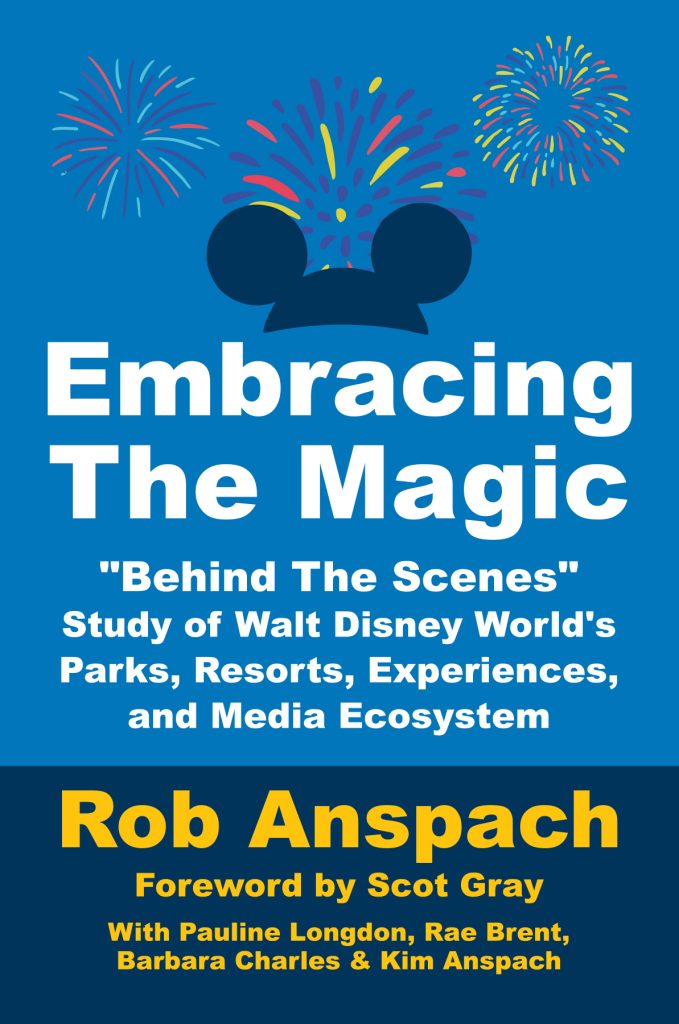
He is the host of the E-Heroes Podcast and the creator of Embrace The Magic and Explore The Magic.





Recent Blog Article Comments