
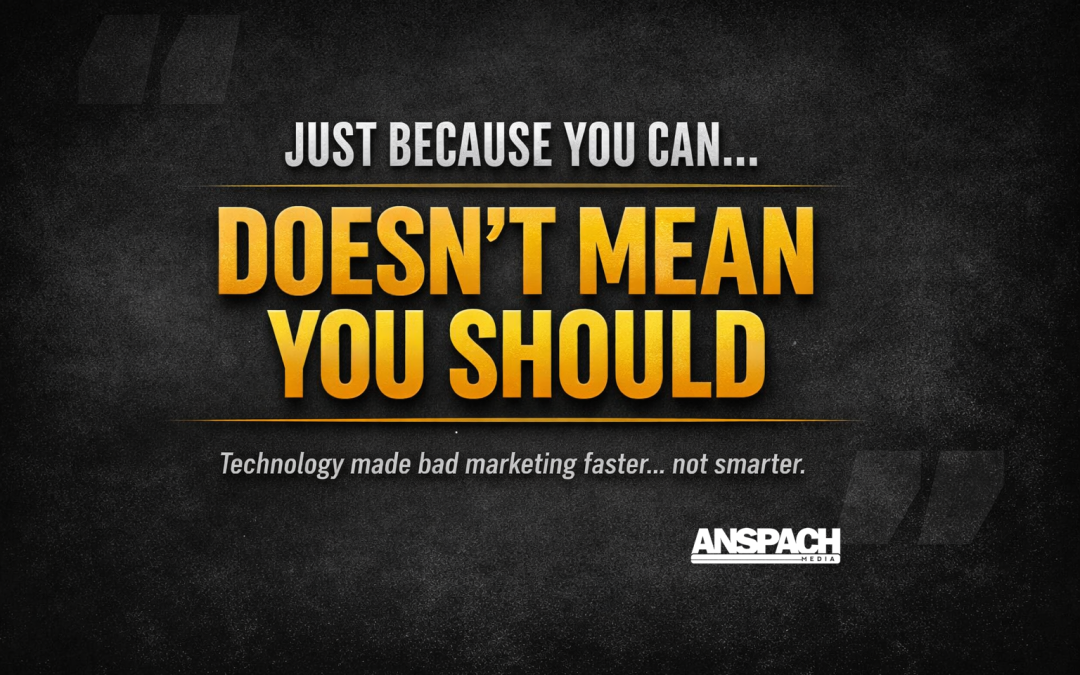
Technology has made marketing easier than at any other point in history. You can reach thousands… sometimes millions… of people with a few clicks. You can automate emails, schedule social posts months in advance, blast advertisements across platforms, and target audiences with more precision than ever before.
And yet… most marketing today is less effective than it’s ever been.
Why?
Because just because technology makes something possible doesn’t mean it makes it smart.
The problem isn’t access.
The problem is accuracy.
The Illusion of “Bigger Is Better”
Modern marketing tools sell you on reach. More impressions. More followers. More eyeballs. More exposure. The numbers look impressive on dashboards and reports. Agencies love showcasing massive reach statistics because it feels like progress.
But reach without relevance is just noise.
Sending a message to 100,000 people who don’t care about your product is far less valuable than sending a message to 1,000 people who desperately need what you offer. Unfortunately, technology has convinced many businesses that scale automatically equals success.
It doesn’t.
Scale without strategy simply amplifies wasted effort.
Technology Doesn’t Replace Understanding People
Marketing has never been about pushing messages. It has always been about understanding behavior. Psychology drives buying decisions far more than convenience or automation ever will.
People buy based on:
• Emotional triggers
• Perceived trust and safety
• Familiarity and authority
• Pain avoidance or pleasure seeking
• Social proof and validation
Technology can deliver messages faster, but it cannot replace the human understanding required to craft messages that actually resonate.
When businesses rely solely on automated outreach or mass targeting, they remove the most important element from marketing… empathy.
Data Is Only Valuable When You Know How To Interpret It
Marketers love data. Open rates, click-through rates, impressions, conversions, bounce rates, heat maps, and dozens of other metrics create the illusion of clarity.
But raw data without context is dangerous.
Two companies can look at the exact same numbers and come to completely different conclusions. Without understanding customer habits, decision-making patterns, and behavioral trends, data becomes little more than digital clutter.
Effective marketing requires asking deeper questions:
Why is this audience responding?
What problem are they trying to solve?
What habits influence their decisions?
What emotional triggers are present?
Numbers show you what happened.
Psychology tells you why it happened.
And understanding the “why” is where real marketing power lives.
The Danger of Marketing To The Wrong Audience
Technology allows businesses to cast wide nets. Platforms encourage it. Ad tools make it simple. Email software makes it effortless. Social media algorithms reward activity.
But reaching the wrong audience can actually damage your brand.
When you market to people who don’t need, want, or value your solution, several things happen:
You attract price shoppers instead of value buyers.
You increase complaints and refund requests.
You waste time educating people who were never qualified prospects.
You dilute your brand messaging.
You burn marketing budgets chasing low-quality leads.
In many cases, marketing to the wrong audience doesn’t just slow growth… it creates operational headaches that drain resources and morale.
Understanding Habits Builds Stronger Marketing
Great marketers study habits. Not just demographics like age, income, or location… but behavioral patterns that shape decision-making.
Habits reveal:
• When customers research solutions
• How they compare options
• What platforms they trust
• How long they take to make decisions
• What influences their final purchase
Two people with identical demographics can have completely different buying habits. One may rely heavily on referrals. Another may trust online reviews. A third may respond only to long-form educational content.
Technology can target demographics.
Only strategic insight can target habits.
Demographics Alone Are Not Enough
For decades, marketers relied heavily on demographic targeting. Age, gender, income level, and geographic location formed the foundation of many campaigns.
While demographics still matter, they represent only a small piece of the marketing puzzle.
Two individuals can share the same demographic profile and still have wildly different motivations, values, and expectations. That’s where psychographics enter the picture… beliefs, interests, priorities, and personal experiences that shape buying behavior.
Marketing that combines demographics with psychology, behavior patterns, and data interpretation becomes significantly more effective.
Automation Should Support Relationships… Not Replace Them
Automation is one of the greatest tools available to modern marketers. It saves time, maintains consistency, and allows businesses to nurture relationships at scale.
But automation should enhance human connection… not eliminate it.
Businesses that rely entirely on automated messaging often sound robotic, disconnected, and transactional. Customers notice. Trust erodes quickly when communication feels mass-produced rather than intentional.
Successful companies use automation to maintain presence while still prioritizing personalized engagement when it matters most.
Authority Beats Volume Every Time
Many businesses believe success comes from reaching the largest audience possible. In reality, authority creates stronger and more sustainable growth than volume ever will.
Authority marketing focuses on:
• Educating audiences rather than interrupting them
• Demonstrating expertise through consistent content
• Building trust through transparency and authenticity
• Creating long-term relationships rather than short-term transactions
When authority is established, marketing becomes easier. Opportunities come to you rather than you constantly chasing them.
The Real Goal Of Marketing
Marketing isn’t about visibility.
It’s about connection.
Marketing isn’t about automation.
It’s about understanding.
Marketing isn’t about how many people you reach.
It’s about reaching the right people with the right message at the right time.
Technology gives businesses incredible power. But power without strategic thinking often leads to wasted resources, frustrated customers, and diluted brand identity.
Just Because You Can… Doesn’t Mean You Should
The next time a new marketing tool promises bigger reach, faster automation, or broader targeting, pause and ask a simple question:
Is this helping me reach the right audience… or just a larger one?
Because effective marketing isn’t about doing more.
It’s about doing what matters… better.

THE AUTHORITY MARKETERS HELPING FORWARD THINKING BUSINESSES BOOST REVENUE, ENHANCE VALUE, & BUILD A LEGACY THAT LASTS FOR GENERATIONS





Recent Blog Article Comments